
Byline: lunyu.ai editorial desk · Review: lunyu.ai editorial desk
Who Was Duke Jing of Qi in the Analects?
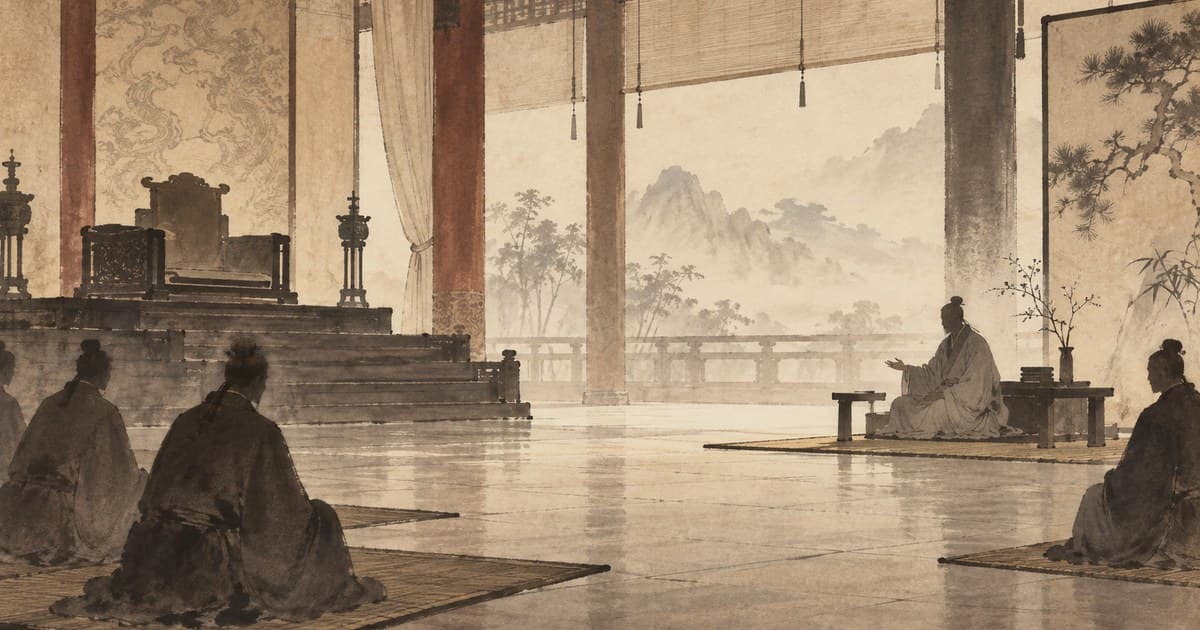
When you search "duke jing of qi," you usually want one Qi ruler placed among many names in the Analects. On this site you meet him as the duke who asks about government in Yen Yuan 12.11 and hears 君君、臣臣、父父、子子—roles held in place. You do not need a Wikipedia résumé first; you can read that scene and notice how proper names for roles become the answer.
Place him by the passages, not by a royal résumé
If you want a compact entry before you open each chapter page, the people index labels him as Duke Jing of Qi—a ruler of Qi who asks about government and proper roles. That line is enough for you to start: follow the linked scenes, keep source text, guide, and English translation in their layers, and refuse to invent sayings the live pages do not show. Treat the index as a map of doors, not as a finished essay that replaces reading. In Legge you may also see “Duke Ching of Ch'i”; on this site the same person is Duke Jing of Qi.
Ask about government—hear roles held in place
In Yen Yuan 12.11 Duke Jing of Qi asks Confucius about government. Confucius answers: there is government when the prince is prince, the minister minister, the father father, and the son son—君君、臣臣、父父、子子. The duke says “Good!” and adds that if those names fail, even with grain he could not enjoy it. You can take that as a door about roles held in place—not as a slogan for forcing obedience, and not as a modern org chart invented outside the text. When you cite it later, keep the Chinese source visible beside the English layer on the same live page.
Two lighter doors—horses, and “I am old”
Elsewhere you may lightly open The Analects · Ke She 16.12: Duke Jing had a thousand teams of horses, yet on the day of his death the people did not praise him for a single virtue—set beside Bo Yi and Shu Qi, who starved yet are still praised. Hold that only as a virtue-versus-display contrast about Jing; you are not reading a Bo Yi–Shu Qi Note here.
Another light door is The Analects · Wei Tsze 18.3: how Qi would rank Confucius between the Chi and Mang houses, then “I am old; I cannot use his doctrines,” and Confucius leaves. You can glance once, then return—this Note stays with who Jing is and how you read the 问政 answer, not with a full Qi-court exit chronicle.
Not Duke Ai, not Duke Ling, not Duke Ding
Elsewhere in the book you may meet Duke Ai of Lu, Duke Ling of Wei, or Duke Ding of Lu—different rulers, different questions. This Note stays with Duke Jing of Qi alone; it is not a multi-duke biography and it does not retell their separate scenes. You should not merge them into one “dukes of the Analects” résumé, and you should not treat this page as a Zeng Zi, junzi, or zhongshu rewrite. Keep each name tied to its own live passages when you need them.
How you should cite him
When you quote Duke Jing’s question or Confucius’s answer, you should name the live chapter URL and say whether you used source Chinese, the modern guide, or Legge’s English. You can mention search interest lightly if needed, but you should never invent impression counts or history dates the brief did not give. Your honesty is the passage page, not a smoother paraphrase that invents a saying.
FAQ
Who was Duke Jing of Qi in the Analects?
You meet Duke Jing (齐景公; also Jing Gong; Legge “Duke Ching of Ch'i”) as the Qi ruler who asks about government and hears that roles must hold—prince, minister, father, son. Your best answer is Yen Yuan 12.11 plus the people index, with 16.12 and 18.3 only as light side doors—not a modern royal biography invented outside the text.
Why do people search "duke jing of qi"?
You often want a clear identity: which duke, which famous answer, which chapter door. Search that phrase (or Legge’s “Duke Ching of Ch'i”), then open the live 12.11 page rather than a summary that invents chapter numbers or softens 君君臣臣. Your reading stays honest when you keep source, vernacular guide, and English translation in separate layers.
What does 君君、臣臣、父父、子子 mean here?
You hear Confucius answer a question about government by naming roles held in place: the prince as prince, the minister as minister, the father as father, the son as son. Hold that as a teaching about names that fit conduct, not as permission to coerce. Your next step is the live Yen Yuan page, not a slogan you paste onto every workplace dispute.
What about the thousand teams of horses in 16.12?
You see Jing’s wealth set beside Bo Yi and Shu Qi: many horses, yet no virtue the people praise at his death; hunger, yet praise that lasts. Read that lightly as a contrast about Jing—not as a full Bo Yi Note. You should not invent extra blame or praise lines the live page does not show.
What about “I am old” in 18.3?
You hear Qi rank Confucius between the Chi and Mang houses, then refuse to use his doctrines because the duke is old; Confucius leaves. Use that only as a light door on Jing’s court, then return here for the 问政 answer. Your habit should be one intent per page: person Note here, exit scene there.
How do you keep from mixing him with other dukes?
You may also meet Duke Ai of Lu, Duke Ling of Wei, or Duke Ding of Lu elsewhere—light names only here, not new biographies. When a passage says “the duke,” check the people index for which ruler it is. Your habit should be one name, one set of linked chapters, not a merged court chronicle.
How do you keep AI from inventing Duke Jing quotes?
If you use a model as a reading aid, you should paste the live passage text and ask for questions, not for “what Confucius must have added in Qi” without a source. Always refuse any newly minted Analects line. Your verification path is always the published chapter URL on this site, lunyu.ai.
Read Yen Yuan 12.11 next
When you are ready for the clearest door on Duke Jing’s question about government and the answer of roles held in place, open The Analects · Yen Yuan 12.11 and read source, guide, and Legge side by side. Ask yourself which names you still owe to hold—then stop, and return to the live text rather than to a summary of the duke.