
Byline: lunyu.ai editorial desk · Review: lunyu.ai editorial desk
Who Was Gongxi Hua in the Analects? Ritual Skill and an Honest Question
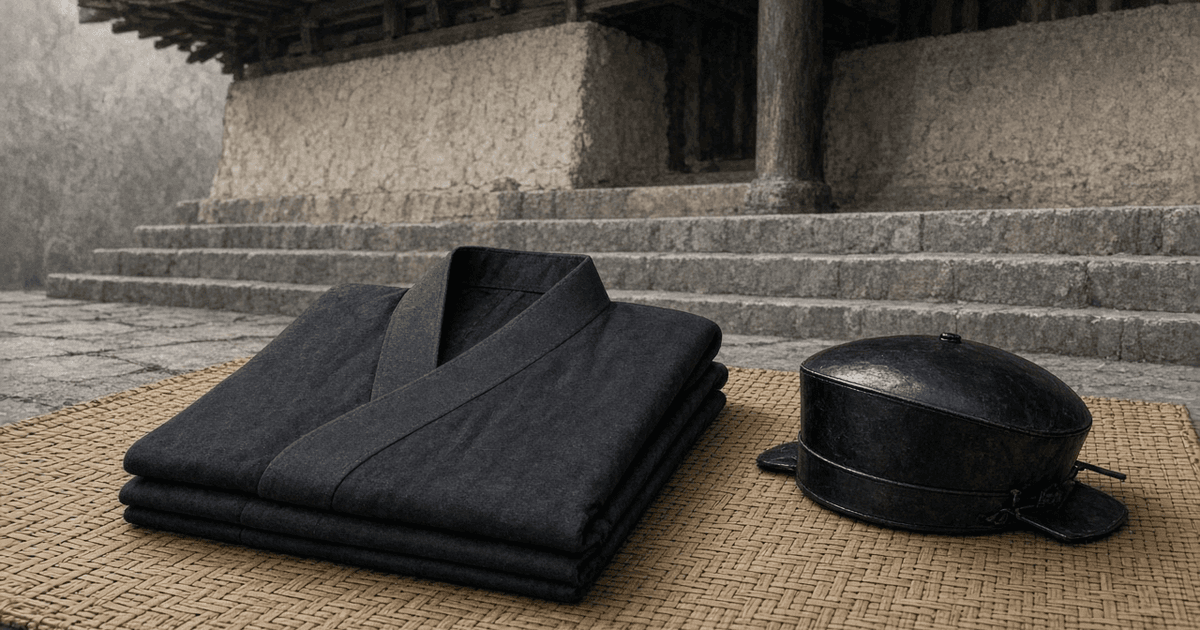
In the Analects, Gongxi Hua (公西华; also called 赤, Ch'ih, and 子华, Tsze-hwa) is the disciple of form: a man fit to stand sashed at court and speak with guests. You watch the book grant him that skill and then withhold a larger word from him. Yet his best moments are not ceremonies. They are two exact remarks: he names what disciples cannot learn, and he says "I am perplexed" when the Master gives two students opposite answers. This Note follows him through five live passages. It is not a Ran You or Zi Lu Note; they appear here only where Gongxi Hua's own line needs them.
Fit for court — and "I do not know whether he is perfectly virtuous"
Start with The Analects · Kung-ye Ch'ang 5.7. Meng Wu asks about three disciples; keep your eye on the third. The source line on him reads 赤也何如。子曰,赤也,束带立于朝,可使与宾客言也,不知其仁也。 The modern guide on that page says: 孟武伯又问:公西赤怎么样?孔子说:公西赤嘛,让他穿戴整齐,束好衣带,站在朝廷上,可以让他去接待宾客办理交涉,至于他是不是仁,我就不知道了。
Legge on the same page: "What do you say of Ch'ih?" The Master replied, "With his sash girt and standing in a court, Ch'ih might be employed to converse with the visitors and guests, but I do not know whether he is perfectly virtuous." You get two things in one sentence: a real, usable competence, and a refusal to call that competence 仁. The book does not mock the skill. It simply will not let skill stand in for the larger word.
His own wish: a small assistant at the temple
The Analects · Hsien Tsin 11.25 is the scene where four disciples sit with the Master and say what they would do if known. On the live page, the source and modern guide stop after Zi Lu's answer; Gongxi Hua's answer appears only in the Legge translation there, so this Note quotes Legge alone for it. Legge: "What are your wishes, Ch'ih," said the Master next to Kung-hsi Hwa. Ch'ih replied, "I do not say that my ability extends to these things, but I should wish to learn them. At the services of the ancestral temple, and at the audiences of the princes with the sovereign, I should like, dressed in the dark square-made robe and the black linen cap, to act as a small assistant."
Later in the same passage, in Legge, the Master comments on him: "Yes; who but princes have to do with ancestral temples, and with audiences but the sovereign? If Ch'ih were to be a small assistant in these services, who could be a great one?" Notice what you are given: Gongxi Hua lowers his own claim ("I should wish to learn them"), and the Master answers that the work he names is not small. The rest of the scene belongs to other Notes.
"This is just what we, the disciples, cannot imitate you in"

In The Analects · Shu R. 7.33 the Master declines the names sage and 仁 for himself and claims only that he keeps at it. The camera here is on Gongxi Hua's reply. The source: 子曰,若圣与仁,则吾岂敢,抑为之不厌,诲人不倦,则可谓云尔已矣。公西华曰,正唯弟子不能学也。 The guide: 孔子说:说到圣与仁,那我怎么敢当呢?不过是朝着这个方向去做而永不满足,教导别人而不知疲倦,可以说就是这样罢了。公西华说:这正是我们弟子学不到的地方啊。
Legge: Kung-hsi Hwa said, "This is just what we, the disciples, cannot imitate you in." You can hear why the line matters. The Master offers "not tiring" as the modest part; Gongxi Hua points out that the modest-sounding part is exactly the hard part.
"I, Ch'ih, am perplexed"
The Analects · Hsien Tsin 11.21 shows you Gongxi Hua as the one who noticed. Zi Lu and Ran You ask the same question and get opposite answers. Gongxi Hua's part of the source: 公西华曰,由也问闻斯行诸,子曰,有父兄在,求也问闻斯行诸,子曰,闻斯行之,赤也惑,敢问。子曰,求也退,故进之,由也兼人,故退之。 The guide renders his words: 我糊涂了,大胆地问一问这是为什么。
Legge, from the end of Kung-hsi Hwa's question: …"I, Ch'ih, am perplexed, and venture to ask you for an explanation." The Master said, "Ch'iu is retiring and slow; therefore, I urged him forward. Yu has more than his own share of energy; therefore I kept him back." Without his question, you would have two contradictory sayings. Because he admits confusion, you get the reason: the answer was fitted to the person.
On a mission to Ch'i
The Analects · Yung Yey 6.3 is not on the Gongxi Hua index, but it names him as 子华 and 赤. The source opens 子华使于齐,冉子为其母请粟。 and the Master later says 赤之适齐也,乘肥马,衣轻裘,吾闻之也,君子周急,不继富。 The guide: 孔子说:公西赤去齐国,乘的是肥壮的马,穿的是轻暖的皮袍。我听说过,君子只周济急需的人,而不去接济富裕的人。
Legge: "When Ch'ih was proceeding to Ch'i, he had fat horses to his carriage, and wore light furs. I have heard that a superior man helps the distressed, but does not add to the wealth of the rich." Take two facts from this door: he was sent on a mission to Ch'i, and he travelled well provided. The lesson about giving is the Master's, aimed at how grain was handed out, not a charge against Gongxi Hua.
What the five doors add up to
Put them together and you have a disciple fit for court and guests (5.7), who wishes only to be a small assistant at temple and audience (11.25), who is sent to Ch'i (6.3), who sees that "not tiring" is what disciples cannot learn (7.33), and who asks why two answers differ (11.21). The book grants his ritual skill and does not call it 仁. What it praises in practice is his modest, exact question. If you want Ran You's side of 5.7 and 11.21, open Who Was Ran You in the Analects? — a soft link only.
As your own reflection — not as Confucius's words — you may be the person who is good at forms: agendas, protocol, how a meeting should run. The Analects treats that as real ability and stops short of calling it the whole of virtue. Gongxi Hua's other gift is open to anyone: when two instructions seem to clash, say so plainly and ask.
FAQ
Who was Gongxi Hua in the Analects?
He is a disciple of Confucius, named in the book as 公西华, 赤 (Ch'ih), and 子华 (Tsze-hwa). The live passages show him fit to stand at court and speak with guests (5.7), wishing to serve as a small assistant at ritual (11.25), and sent on a mission to Ch'i (6.3). Check each line on its passage page and say whether you used the source, the guide, or Legge.
Did Confucius call Gongxi Hua ren?
No. In 5.7 the Master says Ch'ih could converse with visitors and guests at court, then adds 不知其仁也 — in Legge, "but I do not know whether he is perfectly virtuous." The book grants the skill and withholds the word 仁.
What did Gongxi Hua say in 7.33?
After the Master claims only that he works without tiring and teaches without weariness, Gongxi Hua replies 正唯弟子不能学也 — in Legge, "This is just what we, the disciples, cannot imitate you in." He names the steady effort as the hard part.
Why did Gongxi Hua say he was perplexed in 11.21?
Because Zi Lu and Ran You asked the same question and got opposite answers. He said 赤也惑,敢问, and the Master explained that he urged Ran You forward and held Zi Lu back. His question is what makes the reason visible.
What did Gongxi Hua wish for in 11.25?
In Legge's translation on the live page, he says he would like, in ritual dress, "to act as a small assistant" at the ancestral temple and at audiences. On that page the source and guide stop before his answer, so quote Legge for this part.
Open the Gongxi Hua index next
When you want the passages that name him on one screen, open Gongxi Hua. The index groups aspiration and ritual service; this Note followed ritual skill and the honest question, and added 6.3 from outside the index. Read the doors again there in context, and when you quote any of them, give the passage URL and say whether you used the source, the guide, or Legge.